Source Wall-Mounted R404A Monoblock for Food Processing
Find and compare 30 Wall-Mounted R404A Monoblock units designed for commercial refrigeration and food processing applications. These assembled systems feature rotary compressors, low noise operation, and various cooling capacities to meet diverse industrial distribution needs.
Key considerations
Products List


Monoblock Units R404/R290 for Cold Room Refrigeration Use Wall Mounted
$352.00 - $365.00
MOQ: 1 Pieces


Rigid R404A Wall-Mounted Monoblocks for Commercial Food Storage Solutions
$1650.00 - $2300.00
MOQ: 1 Pieces

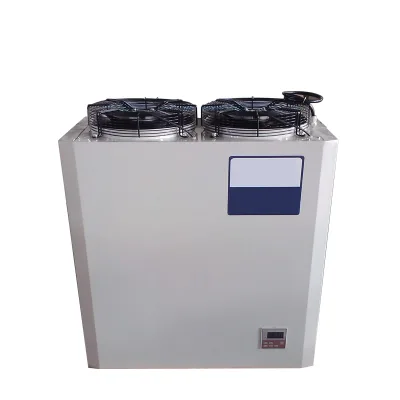
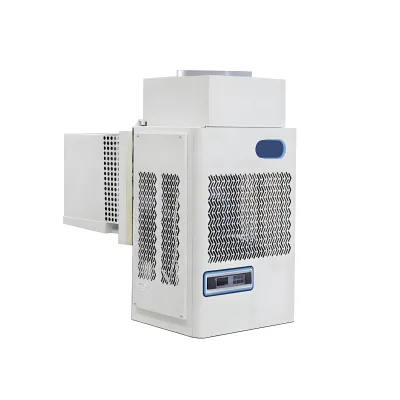

1HP 2HP 3HP 4HP Wall Mounted Monoblock Refrigeration Condensing Cooling Unit
$800.00 - $1820.00
MOQ: 1 Pieces

R290 Wall Mounted Monoblock Refrigeration Condensing Unit for Cold Storage Room
$800.00 - $1500.00
MOQ: 1 Pieces


Wall Mounted Monoblock Refrigeration Unit for Walk in Cooler Cooling System
$800.00 - $1500.00
MOQ: 1 Pieces

Easy-to-Install Wall Mounted Drop in Monoblock Refrigeration Unit for Cold Room
$800.00 - $1820.00
MOQ: 1 Pieces

Thermojinn Easy Assembling Refrigeration Unit Wall Mounted Monoblock for Cold Storage
$450.00 - $1500.00
MOQ: 1 Pieces

Thermojinn Class a Multi-Function Wall Type Monoblock for Cold Room Refrigeration Units
$450.00 - $1500.00
MOQ: 1 Pieces

Thermojinn A01W/A01t Wall Straddling & Through Wall Monoblock for Refrigeration
$450.00 - $1500.00
MOQ: 1 Pieces

R290 CE ETL Certificate Ceiling and Wall Mounted Monoblock Unit for Europe
$2999.00 - $11999.00
MOQ: 1 Pieces


3HP Wall-Mounted Side Embedded Fixed Frequency Monoblock Units Suitable for Cold Room
$1151.00 - $1360.00
MOQ: 1 pieces

Wall Mounted Inverter Monoblock Condensing Unit for Small Cold Room 3HP
$1250.00 - $1400.00
MOQ: 1 sets


Monoblock Unit Condensing Unit Wall Mounted Unit for Cold Room Storage
$800.00 - $900.00
MOQ: 1 Pieces
Comprehensive Sourcing Guide
Wall-Mounted R404A Monoblock Sourcing Guide
Procuring wall-mounted R404A monoblock units requires a precise understanding of the specific configuration where the compressor, condenser, and evaporator are integrated into a single outdoor or semi-outdoor assembly designed for compact mounting. These units are distinct from split systems because they eliminate the need for extensive refrigerant piping between indoor and outdoor components, reducing potential leak points and installation complexity. The observed market data indicates that these products are primarily engineered for food processing and commercial refrigeration applications, where space efficiency and rapid deployment are critical operational priorities.
Buyers must recognize that while the core keyword suggests a wall-mounted form factor, the actual product listings reveal a mix of outdoor condensing units and monoblock configurations that may vary in physical orientation. The supply chain data confirms that these units are manufactured in China and often feature a "Plug-in" unit type, suggesting a design intended for simplified electrical and mechanical connections. When sourcing, it is essential to verify whether the specific listing refers to a true wall-mounted evaporator or an outdoor condensing unit that serves as the heart of a larger system, as the distinction impacts mounting requirements and environmental exposure ratings.
Product Scope and Observed Listing Signals
The observed product range for R404A monoblock units spans a cooling capacity from 1HP to 12HP, with specific models identified by codes such as BYGY-010-QXL-REDP and BYGY-030-QXD-REDP. These listings indicate a modular approach to sizing, allowing procurement teams to select units that match specific load requirements without over-engineering the system. The presence of both "Small" size specifications and larger dimensional data suggests that the market offers a variety of form factors, ranging from compact units for smaller walk-in coolers to larger assemblies for industrial cold storage facilities.
Listing signals also highlight significant variation in system types, with some units described as "Closed System" and others as "Open System," a distinction that fundamentally alters the maintenance and operational strategy for the buyer. The cooling capacity data further reveals a split between 1-4HP and 1-12HP ranges, indicating that suppliers may categorize products differently based on the intended application field, such as back pressure or intermediate back pressure systems. Buyers should scrutinize the "Product" attribute to ensure the listing explicitly matches the "Monoblock Units" or "Outdoor Condensing Unit" classification required for their specific infrastructure.
Technical Specifications to Verify
Verifying the refrigerant type is the first critical technical step, as the supplied data shows a mix of R404A, R448A, R455A, R454c, R449, R290, and R513 options across different listings. While the core keyword specifies R404A, the actual market availability includes alternative refrigerants that may offer better environmental profiles or efficiency, requiring the buyer to confirm the exact gas charge before finalizing the order. Additionally, the power supply specifications vary between 220V~240V/50Hz and 220V-240V, necessitating a strict check against the local electrical grid standards to prevent equipment damage or operational failure.
The cooling capacity and evaporator temperature ranges are equally vital, with observed data indicating evaporator temperatures from -40°C to -5°C and cooling capacities ranging from 1HP to 12HP. Buyers must cross-reference these specifications with their specific application needs, such as whether the unit is intended for low-temperature freezing or intermediate cooling, as the "Application Fields" data points to both food processing and commercial refrigeration. Furthermore, the noise level is listed as both "Low" and "Ultra Low," and the fan species varies between single-speed and frequency fans, meaning the acoustic performance and energy consumption will differ significantly between models.
Compliance and Safety Documentation
Certification verification is a non-negotiable aspect of sourcing these units, as the observed listings consistently display RoHS, CE, and CCC marks, with some models also carrying ISO certification. These certifications indicate that the manufacturing process adheres to specific environmental and safety standards, but buyers must ensure that the documentation provided for the specific batch matches the claimed certifications, as the supply chain data shows variations in the certification lists for different product models. The presence of "According to the product" as a standard suggests that compliance may be model-specific, requiring a detailed review of the technical file for each unit type.
Safety documentation must also address the refrigerant handling and electrical safety, particularly given the use of R404A and other hydrofluorocarbons which have specific environmental regulations. The "System Type" attribute, whether closed or open, influences the safety protocols required for installation and maintenance, and the "Mute" attribute indicates that some units are not designed for silent operation, which is a critical factor for installations near occupied spaces. Buyers should request the full safety data sheet and installation manual to confirm that the unit meets the local regulatory requirements for refrigerant handling and electrical grounding.
Cost Drivers and Commercial Terms
The pricing for these units is highly variable, with observed listings ranging from $36 to $11,999, a spread that reflects differences in cooling capacity, refrigerant type, and included accessories. This wide range suggests that the base price may not include essential components like the wooden package or carton box and pallet packing, which are listed as standard packaging methods but may incur additional logistics costs. Buyers must clarify whether the quoted price includes the full assembly, including the rotary compressor and fans, or if these are sold as separate components, as the "Structure" attribute confirms the units are "Assembled" but does not guarantee the completeness of the package.
Commercial terms such as the Minimum Order Quantity (MOQ) and lead time are also significant cost drivers, with observed MOQs ranging from 1 to 100 units. The "After-Sales Service" attribute indicates an 18-month warranty period, which is a crucial factor in the total cost of ownership, but buyers should verify the specific terms of this service, including whether it covers parts, labor, or travel expenses. The "Use Nature" is listed as "Distribution," implying that these units are intended for resale or integration into larger systems, which may affect the pricing structure and the availability of bulk discounts.
Supplier Qualification and Quality Control
Supplier qualification should focus on the manufacturer's ability to consistently produce units that meet the "According to the product" standard, as the observed data shows a mix of standards and specifications that may not be uniform across all listings. The "Made in China" origin is a common attribute, but buyers must verify the specific factory's quality control processes, particularly regarding the assembly of the monoblock units and the integrity of the refrigerant charge. The "Condition" is listed as "New" for all observed products, but this should be confirmed through a pre-shipment inspection to ensure that the units have not been damaged during storage or transit.
Quality control checks must also include a verification of the "Product" attributes, such as the "Type" being "Air-Cooled" and the "Fans Species" being either single-speed or frequency fans. The "Cooling Water" attribute is listed as "Industrial Water," which may be relevant for specific cooling tower applications, but buyers should confirm if this applies to the specific monoblock unit or if it refers to a different system component. The "Dimension" data, such as 686025 cm or 685905730 mm, provides a baseline for space planning, but buyers should request detailed engineering drawings to ensure the unit fits the intended installation location.
Long-Term Procurement Checks
Long-term procurement success depends on establishing a reliable supply chain for spare parts and maintenance services, given the "18 Month" after-sales service period observed in the listings. Buyers should negotiate clear terms for the availability of replacement components, such as the rotary compressor, fans, and control boards, to minimize downtime after the warranty period expires. The "Application" fields, including "Back Pressure Type" and "Intermediate Back Pressure Typ," suggest that these units are part of complex refrigeration systems, making the availability of technical support and specialized parts critical for long-term operation.
Finally, buyers must monitor the evolving regulatory landscape regarding refrigerants like R404A, as environmental regulations may shift towards lower-GWP alternatives such as R448A or R290. The observed listings show a mix of refrigerants, indicating that suppliers are adapting to these changes, but buyers should plan for potential obsolescence or retrofitting requirements. Establishing a relationship with a supplier who can provide guidance on future-proofing the system and transitioning to compliant refrigerants will ensure the longevity and regulatory compliance of the procurement investment.
FAQs
What certifications do these units have?
These units typically hold RoHS, CE, and CCC certifications. Some models also include ISO certification. These standards ensure compliance with safety and environmental regulations for international trade and installation in various commercial settings.
Can the product be customized?
Yes, customization is available for these monoblock units. Buyers can request specific modifications to meet unique operational requirements. This flexibility allows for tailored solutions in food processing and commercial refrigeration applications.
What is the cooling capacity range?
The cooling capacity ranges from 1HP to 12HP. This wide range supports various application fields, including food processing and commercial refrigeration. The units are designed to handle different thermal loads efficiently.
How is the product packed?
The product is packed in wooden packages, carton boxes, or pallets. This secure packaging ensures safe transportation and handling. The packing method protects the unit from damage during shipping and storage processes.
What is the power supply requirement?
The power supply requirement is 220V~240V/50Hz. This standard voltage ensures compatibility with most commercial electrical systems. The units are designed for stable operation under these specific electrical conditions.
What refrigerant is used in the system?
The system uses R404A refrigerant, with some models supporting R404A/R448A/R455A/R454c. These refrigerants are selected for their efficiency and environmental compatibility. The choice depends on the specific model and application requirements.